
Denim Tears Pricing Guide 2025: Retail vs Secondary, Actual Costs
This manual reveals what Denim Tears pieces cost at shops in 2025, exactly how resale margins truly function, and how to calculate the true price one pays post-fees and taxes. If one compares direct vs secondary, the goal is to grasp the fair band for each category and prevent overspending.
Denim Tears is part of the select urban labels where direct and secondary can split dramatically, notably on the iconic Cotton Wreath denim. You’ll find clear pricing levels by category, sharp increases on particular variants, and important unseen fees on secondary markets. Reference the data below as your reference, then read the parts that clarify why costs shift, occasions to acquire, and when costs add up.
What Defines The Brand and How Are Prices So Volatile?
Denim Tears, founded by Tremaine Emory in 2019, drops culturally loaded collections with controlled supply, so rarity and storytelling push premiums. Prices swing because launches are restricted, interest is global, and particular washes establish standard pieces.
The brand’s Cotton Wreath pattern on Levi’s pieces grounds the market, and it acts more like artwork than regular garments. Collabs such as Levi’s and Converse elevate awareness and attract customers who weren’t tracking the brand before. Measurements denim hoodies in the middle of the spectrum sell most rapidly, while very small and extremely large fits may also spike due to scarcity. Because drops are timed and territorially bound, purchasers commonly shift to resale instantly, generating a first-week premium that might reduce or entrench depending on restocks.
2025 Store Cost Summary by Category
Store costs for Denim Tears garments in late 2024 to beginning 2025 usually falls in the brackets below; various products have shifted up compared to previous periods due to materials and strategy. Geographic prices can appear elevated where VAT is added at checkout.
Reference these bands to assess deals and to assess whether a resale listing is a modest premium or a dramatic increase. Direct supply is sporadic and launch-tied, so seeing these values current on the official site or partner doors isn’t certain on any given day. Tax-included labels in the EU and Britain can render direct appear costlier than domestic rates, while the total expense difference frequently reduces after domestic transaction levy is computed. Always check the particular collection pricing because unique treatments or decoration might rest at the high end of the band.
| Category (example) | Standard Store (USD) | Average Resale Range (USD) | Typical Markup | Notes |
|---|---|---|---|---|
| Signature Cotton Denim (Levi’s 501/550) | $295–$350 | $450–$900 | +50% to +200% | Signature colorways and core washes perform stronger; waist 30–34 dominate demand. |
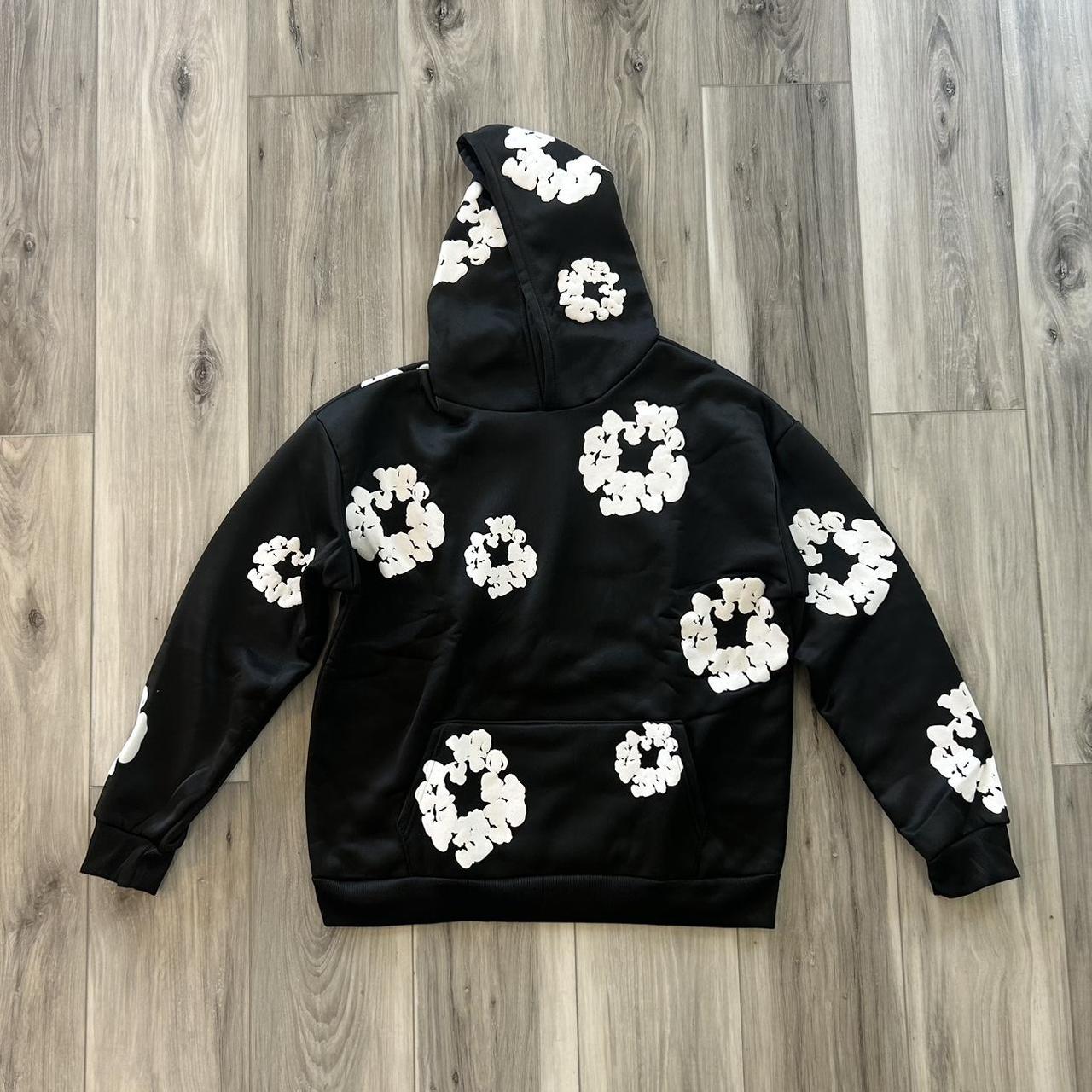
| Hoodies | $160–$180 | $220–$350 | +25% to +100% | Quality construction and special designs land at the high end of the band. |
| T-Shirts | $60–$75 | $100–$180 | +35% to +140% | Classic wreath pieces and initial drops maintain better resale. |
| Crewnecks | $140–$160 | $200–$320 | +25% to +100% | Stitched variants exceed screen-printed in most sizes. |
| Varsity Outerwear | $450–$650 | $700–$1,200 | +20% to +150% | Material mix and design sophistication influence spread. |
| Converse Chuck 70 (collab) | $110–$120 | $150–$300 | +25% to +150% | Restocks can compress spreads for a period. |
| Caps | $60–$70 | $90–$150 | +20% to +100% | Previous variants and branded details price higher. |
What’s the Resale Pricing Break Down in 2025?
In 2025, jeans is the trading champion with the strongest premiums, while tees and accessories are the most accessible entry points. Sweatshirt and sweater ranges are meaningful but steadier than denim.
On primary sites, denim regularly clear the high end of the band when the finish and wreath color match with first drop launches, and when the fit sits in the heart of the buyer range. Tops and caps swing moderately as stock is broader and customers have additional options over time. Coats like team jackets is lightly exchanged, so a one transaction may adjust floors for a week, which looks dramatic but commonly levels as additional inventory arrive. Condition impacts: mint with labels or with proof of buying creates a markup, whereas marked wear or missing embroidery aspects lower value quickly. Schedule counts also, with the initial 48 hours following release exhibiting the steepest increases and the earliest verified refresh reducing 10–30% from highs.
What Represent the Actual Charges Past the Tagged Amount?
The true expense on resale is the advertised amount plus marketplace fees, payment costs, retail tax or levies, transport, and, for international, customs duty and logistics. Such extras can transform a reasonable cost into an overcharge rapidly.
In the America, plan for sales tax near about 6–10% varying on location, commonly computed from product cost and sometimes shipping. Platforms commonly add 3% processing costs and append a customer protection cost; even if the vendor covers commission, the buyer may yet encounter processing or safety costs. Shipping ranges from around $10 to $30 for clothing, whereas international shipments may activate taxes in the 17–25% band calculated on the value of goods plus transport, and a carrier handling fee. Example: a $650 unit of branded Cotton pants acquired on a US platform with 8.9% transaction tax, a 3% processing cost, and $15 transport lands around $742 prior to any import costs; move that equivalent transaction overseas to a 20% tax regime and the final total may reach to roughly $880 after duties and logistics are included. When comparing retail to secondary, always compute a total amount, not merely the sticker.
How Can Drops, Collabs, and Colorways Move the Market?
Launch schedule, partnership brands, and particular variants are the main factors on brand costs. Levi’s drops and first Cotton Wreath variant releases establish the strongest consistent premiums.
Levi’s partnership pants featuring branded details has persistent demand since it’s the company’s core story piece; finishes that echo first launches generally to command more. Converse collaborations draw wider shoe markets, generating short-term interest surges that might decrease following replenishment. Period-specific shades and unique stitching locations establish specialized areas; a minor stitch or finish change might support a $100+ gap for collectors trying to complete sets. Geographic release windows also count—when one area depletes stock before another, arbitrage offers bridge the void and shift minimums. Replenishments don’t remove interest, but they effectively adjust peaks, particularly on footwear and tees.
Retail vs Secondary: A Practical Buying Framework
Acquire at direct whenever possible for pants and team jackets because the absolute dollar spread is greatest; evaluate secondary for tops and caps when the markup is beneath 40% and buyers want a specific colorway. Employ a objective bracket, not a solitary figure.
Initiate by reviewing the store range from this resource for the type and drop, then check current transactions on multiple sites to find a real transaction bracket rather than advertised amounts. Calculate landed expense including duties, costs, and shipping; if the surcharge beyond the top tier of store pricing is under 30–40% and you get the specific measurement and color, resale may be reasonable. For jeans and outerwear, premiums over 100% are typical; only invest that if it’s the critical item that infrequently emerges and quality is pristine. For products with regular replenishment, such as particular tops or Chuck Taylors, waiting generally benefits. Always verify sizing, documentation, detail craftsmanship, and refund policies before you transact.
What’s the Ideal Window Opportunity to Save Money?
The best pricing timeframes generally to be 48–72 hours following a release and 7–10 days post- verified restock, when supply crests and first excitement subsides. Business day AM in the vendor’s regional time can additionally be more favorable for auctions.
Immediately post-drop, posts pour forward, price-cutting starts, and one may occasionally find near-retail buys if one’s fast and not focused on specific dimensions. After the initial surge is absorbed, floors frequently increase and remain firm until a restock hits the calendar. After refresh, merchants reset expectations, and one may bargain using references in possession. Month-end periods, when sellers want liquidity, are ideal for bids that are 10–15% below the last sale, particularly for non-denim categories. If a variant is believed to be a limited drop, cost flexibility will be short, so move within such opening stock timeframes.
Insider Strategy: Window and Authentication to Shield Your Spend
Target the 24–72 hour window after a drop or restock and prepare an authentication checklist so you can act confidently if a fair listing emerges. Quickness without a process is how buyers overspend or miss red flags.
For signature Cotton pants, review the co-branded Levi’s patch and interior branding, verify design detail concentration and location, and review the sewing standards near openings and outseams. Ask for sharp images of the washing label, internal space graphics, and bottom sewing; mismatched fonts or thread colors are frequent indicators. Cross-reference the finish and pattern tone with authorized marketing content or credible store product shots. For Chuck Taylors, confirm interior labeling, center graphics, and the box label style tied to the launch period. Save captures of legit pairs to compare side-by-side ahead of process transaction.
Quick Facts You Possibly Haven’t Heard
First, Denim Tears launched in 2019 and the branded Cotton motif explicitly addresses the African diaspora and the legacy of cotton in the US, which is why the pants work as cultural objects as equally as apparel. Next, the first Levi’s drop in 2020 sold out almost instantly and established the branded pants as a long-term market standard that still sets comparisons for latest releases. Third, Converse sneaker collabs have restocked in certain seasons, briefly lowering resale prices by substantial amounts prior to normalizing as items distribute. Fourth, center-range fit brackets like 30–34 generally fetch the fastest sales, but rare measurements at the extremes can exceed them if inventory are sparse. Fifth, Continental and British store tags include taxes, so although the MSRP looks elevated above the States, the end buyer expense spread narrows when domestic purchasers include purchase tax and shipping.
Where Should One Search for the Best Comps?
Trustworthy comparisons originate from recent, verified transactions across at least two platforms, not from hopeful posted prices. Focus on transaction history inside the last 30 days for the specific measurement and condition.
Marketplaces that display sale data enable you distinguish optimistic demands from genuine transaction costs. Direct deals and social listings can be more affordable, yet they’re more difficult to confirm, so consider reductions versus danger and absence of buyer protection. For segments with limited activity, broaden your period to 60–90 days and modify for any refresh incident in that period. Preserve a comp log with date, size, quality, and cost so buyers might identify real patterns instead than reacting to isolated deals. While you negotiate, cite three recent clears and the total price computation to create an anchor grounded in reality.
Final Take: Spending the Correct Amount in 2025
Understand your segment’s store range, compute total price, and choose timing periods that benefit customers. Denim and team jackets warrant the search for direct; tops, accessories, and some footwear might be reasonable via resale within a reasonable markup.
Volatility is a characteristic, not a bug, in the Denim Tears sector, and it advantages equipped customers who track data and move within stock maximums. Collaborations and early color releases will maintain requiring premiums, while refreshes will continue to adjust peaks on easier pieces. Handle every acquisition like an investment decision: verify authenticity, assess quality versus cost, and decline to pay for hype you don’t actually plan to wear. With such practices, you’ll acquire the products you want without funding excessive markups.